
Calming Activities for Hyperactive Dogs: Teach Your Pup the Art of Relaxation
That long daily run you're using to tire out your pup might actually be making them more hyper! It sounds backwards, but constant high-intensity exercise often just creates a more athletic, restless dog. We know how exhausting it is to deal with constant pacing, barking, or destructive chewing. You love your pet, but it's completely normal to feel frustrated when you can't find a moment of peace. If you want a quieter home, it's time to explore calming activities for hyperactive dogs that engage their brain instead of just their muscles.
Calmness is a skill that any dog can learn! We're so excited to show you how to transform that frantic behavior into peaceful focus using expert-backed enrichment strategies. You'll discover how to help your dog settle on their bed voluntarily while lowering the stress levels for your entire household. It's all about scent work, brain games, and simple routine shifts that build a deeper bond. Get ready for a happier, more relaxed life together! You can finally enjoy your companion without needing to lace up those running shoes every single hour.
Key Takeaways
- Learn why extra long runs might be creating a super-athlete instead of a calm companion. Discover how mental satisfaction beats physical exhaustion every time!
- Tap into your dog's natural instincts with scent work and interactive toys. Just 15 minutes of sniffing can be as effective as a long walk for tiring out a busy mind.
- Master specific calming activities for hyperactive dogs that teach a reliable "off switch." You can move from high-energy play to a relaxed state with simple, intentional games.
- Use the power of biology to trigger relaxation through repetitive licking and therapeutic chewing. It's a natural way to release soothing endorphins in your pup's brain.
- Create a dedicated "Zen Zone" with premium pet beds to help your pup overcome FOMO. A physical space for resting signals that it's finally time to power down and relax.
Why 'Tiring Them Out' Isn't Always the Answer
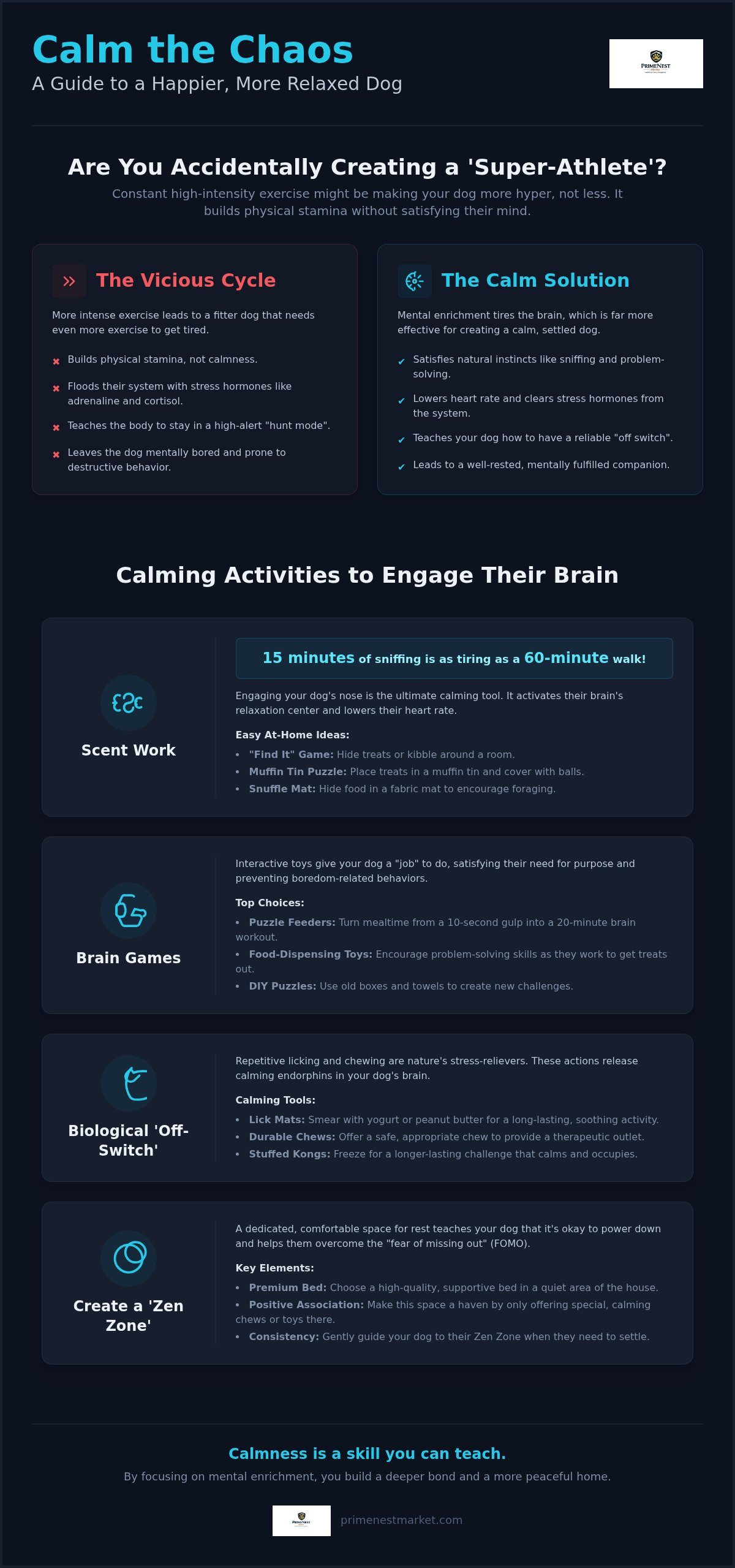
Many pet parents think the secret to a quiet evening is a three-hour game of fetch. It feels like the right move! But often, you're actually training a marathon runner. This is the "Athlete Dog" trap. By pushing for more and more physical activity, you're simply building your dog's stamina. Their body becomes more efficient. Suddenly, that long walk doesn't even make a dent in their energy levels. You're left with a dog that is physically fit but still mentally revved up! True peace comes from mental satisfaction, not just physical exhaustion.
Understanding canine behavior fundamentals helps us see that hyperactivity is often a chemical state. High-arousal games like fetch or wrestling flood your dog's system with cortisol and adrenaline. While they look like they're having fun, they're actually stuck in a high-alert "hunt mode." This makes it much harder for them to settle down later. Instead of more running, we need to focus on calming activities for hyperactive dogs that lower these stress hormones. It's about working the brain, not just the paws!
The Science of the Adrenaline Cycle
Did you know it can take hours, or even days, for a dog's heart rate and cortisol levels to return to baseline after a high-intensity session? If your pup is constantly chasing balls, their system never truly resets. They stay in a state of hyper-vigilance. Low-arousal activities, like sniffing or gentle searching, are essential for long-term balance. These help clear the "brain fog" of adrenaline. They teach your dog how to actually exist in a quiet, happy state without needing constant movement.
Recognizing Boredom vs. True Hyperactivity
Is your dog truly hyperactive, or are they just bored? Many pups act out because their brains are starving for a challenge! Destructive chewing or constant pacing are often cries for mental stimulation. Different breeds express this differently. A Border Collie might start "herding" your feet, while a Terrier might dig up your favorite rug. Tracking what happens right before a frantic episode can help you spot the triggers. When you swap a frantic run for structured calming activities for hyperactive dogs, you'll see a massive shift in their ability to relax. It's a total game changer for your household harmony!
Scent Work and Brain Games: Engaging the Mind
Did you know your dog's nose is basically a superpower? While we see the world, they smell it! Engaging that sense is one of the most effective calming activities for hyperactive dogs. In fact, just 15 minutes of intensive sniffing can tire a dog out as much as an hour-long walk. This happens because scent work activates the relaxation center of the brain. It lowers their heart rate and switches them from "go-go-go" mode into a focused, calm state. It is the ultimate shortcut to a peaceful pup!
Introduction to Nose Work at Home
You don't need fancy equipment to start scent training. The "Find It" game is a perfect first step! Start by tossing a few treats on the floor while saying the command. Once they get it, make it harder. Hide treats under a towel or behind a chair. You can even create DIY puzzles using old cardboard boxes or muffin tins. This gives them a sense of purpose and accomplishment.
- Layer treats under crumpled packing paper in a box.
- Hide a favorite toy inside a cupboard (leave it slightly ajar).
- Scatter kibble in the grass for a "find it" session outside.
As your dog improves, hide items in different rooms or at different heights. This keeps their brain working hard to solve the puzzle. It prevents them from falling back into frantic pacing because they are too busy using their nose to hunt!
Interactive Toys for Mental Mastery
Sometimes you need your dog to settle while you're busy. That's where interactive dog toys come into play. These toys give your dog a "job" to do, which is exactly what a high-energy brain craves. Instead of gulping down dinner from a bowl in ten seconds, try a puzzle feeder. It turns mealtime into a 20-minute brain workout that leaves them satisfied and ready for a nap.
Choosing the right toy depends on how your dog likes to solve problems. Some pups love to nudge and roll things, while others prefer to pick up and shake. Finding that perfect match helps prevent frustration and encourages deep focus. If you're looking to upgrade your pup's playtime, you can explore our curated selection of enrichment toys designed to occupy even the busiest minds. It is the easiest way to transform zoomies into quiet, productive play!
Calming Games to Teach the 'Off Switch'
Many high-energy pups are like sports cars with no brakes. They have all the speed in the world, but they don't know how to slow down! Learning to settle is a skill that must be practiced just like a sit or a stay. It doesn't always come naturally to every breed. Teaching an "off switch" is one of the most vital calming activities for hyperactive dogs. By practicing intentional transitions from play to rest, you help your dog master their own impulses. This foundation of impulse control makes every other part of training so much easier and more enjoyable for everyone!
The 'Ready, Set, Down' Game
This game is a fantastic way to practice moving between different energy states. It teaches your dog that they can go from "excited" to "calm" in a heartbeat! It is all about showing them that they are in control of their own arousal levels. Follow these simple steps to get started:
- Step 1: Engage in a brief, low-intensity game of tug. Keep it fun, but don't let them get too rowdy.
- Step 2: Suddenly stop all movement. Hold the toy still against your leg and calmly ask for a "down" or "settle."
- Step 3: The moment their belly hits the floor, reward the instant relaxation with a calm treat or gentle praise.
Repeat this a few times during your play session. Eventually, your dog will learn that relaxation is the fastest way to get back to the fun. It builds a mental bridge between high-energy play and a peaceful state of mind. You'll be amazed at how quickly they start to offer a "down" without you even asking!
Rewarding the 'Do Nothing' Moments
We often spend so much time correcting bad behavior that we forget to celebrate the good stuff! Capturing calmness is a total game-changer for a frantic household. When you see your dog choose to lie down on their own, reward them immediately. Don't make a big fuss or use a squeaky voice. Just calmly drop a treat between their paws and keep moving. This teaches them that "doing nothing" is a highly profitable activity.
Ignoring hyper behavior is only half the battle. You must actively show your pup what you want them to do instead. Developing a "settle" cue helps them find their focus even in high-distraction environments. To make this even more effective, use "place" training. Give them a physical boundary to signal that it's time to power down. Our premium pet beds are perfect for this! A cozy, supportive bed becomes a clear visual cue that the workday is over. It's their personal sanctuary for deep, restorative rest. When they have a comfortable spot of their own, they're much more likely to choose relaxation over pacing!
Licking and Chewing: The Biological 'Off-Switch'
Did you know your dog has a built-in relaxation button? It’s true! Repetitive licking and chewing aren't just habits. They are powerful biological tools. When a dog licks or chews, their brain releases soothing endorphins. These feel-good chemicals act as a natural sedative. It's one of the most effective calming activities for hyperactive dogs because it works from the inside out. Instead of fighting their energy, you're helping their body chemically transition into a peaceful state. It's like a spa day for their brain!
Therapeutic Licking Techniques
Licking is a repetitive, rhythmic motion that actively lowers cortisol levels. You can use silicone mats or textured toys to make this a long-lasting, soothing session. Spread something tasty across the surface and let them go to town! This is a perfect tool to use right before you expect a zoomie episode. If you know the "witching hour" is coming, set up a licking station ten minutes early. It redirects that frantic energy before it even starts. It gives them something productive to do with all that internal buzz.
- Use textured silicone mats to increase the surface area for licking.
- Freeze the mat for 30 minutes to make the activity last twice as long.
- Introduce these sessions during high-stress times like thunderstorms or fireworks.
Choosing Safe and Engaging Chews
Not all chewing is created equal. Destructive chewing happens when a dog is bored or stressed and has no outlet. Therapeutic chewing is a structured, intentional activity. The key is matching the toy to your dog's jaw strength. For hyperactive chewers, durable rubber is often better than nylon. Rubber has a "give" to it that provides sensory feedback. This is much more satisfying and relaxing for a high-strung pup. It helps them focus their intensity on one safe object.
Try using a chew session as a transition activity. After a walk, your dog’s heart rate is often still high. Instead of letting them pace the house, give them a chew toy. It helps them "power down" after the excitement of the outdoors. If you want to see a real difference in your pup's focus, shop our collection of Pet Toys & Enrichment. These tools are hand-selected to help your dog find their inner zen! An evening chew session is like a warm cup of tea for your pup. It prepares their mind for a deep, restorative sleep on one of our premium pet beds.
Building a Zen Zone: Why Quality Rest is the Ultimate Activity
Hyperactive dogs are the world champions of FOMO! They're terrified of missing a single crumb drop or a squirrel sighting. This constant state of "on" makes it incredibly hard for their bodies to recover from the day. While we've already covered brain games and licking, those are just the setup. The real magic happens when your pup finally allows themselves to drift into a deep sleep. Creating a Zen Zone is the final piece of the puzzle for calming activities for hyperactive dogs. It's about building a physical environment that signals it's safe to power down.
Designing the Perfect Pet Sanctuary
Your pup's rest area shouldn't be in the middle of the kitchen. Choose a quiet corner away from the main foot traffic. This reduces the number of times they'll pop their head up to see what you're doing. You can even use white noise or soft, calming music to mask outside triggers like delivery trucks or barking neighbors. A dedicated spot also reinforces your "place" training. When they see their special bed, their brain starts to transition into a lower energy state. It’s their personal sanctuary where the world finally goes quiet.
Temperature and Comfort Optimization
Did you know that being too warm can actually trigger restlessness? A dog that can't get comfortable will pace and pant. This makes them look hyper even when they're actually just hot. Helping them physically cool down is a great way to lower their heart rate. Cooling mats are absolute lifesavers during the summer months! They provide immediate relief and help settle a revved-up system. You can even grab a 10% discount on orders over $50 for summer essentials to get your pup's cool-down station ready.
Physical comfort is just as important as the environment. Investing in high-quality orthopedic pet beds ensures your dog gets the restorative sleep they need. These beds support their joints and allow for a much deeper rest than a thin mat ever could. If you have a bigger pup, you can often find large dog beds on sale to provide that premium luxury. When your dog feels supported and cool, they stop fighting the sleep they so desperately need. It’s the ultimate way to finish a day of enrichment!
Ready to Embrace the Quiet?
You’ve learned that a peaceful pup is about more than just long walks! By engaging their brain through scent work and teaching that vital "off switch," you’re giving your dog the tools they need to succeed. Remember that rest is just as important as play. Creating a dedicated Zen Zone with a supportive bed helps your dog overcome FOMO and finally settle down. These calming activities for hyperactive dogs aren't just training exercises. They are beautiful ways to build a deeper, more joyful bond with your best friend.
We’re here to help you every single step of the way! Shop our curated collection of calming toys and cozy beds today! You’ll enjoy fast shipping on all your calming essentials and a secure checkout for a worry-free experience. Plus, don’t forget you get 10% off your first order over $50! It’s the perfect time to stock up on enrichment favorites that your pup will love. You’ve got this, and we can’t wait to hear about your pup’s amazing progress. Here is to many more cozy, quiet evenings together!
Frequently Asked Questions
Can certain calming activities actually make my dog more hyper?
Yes, some activities can backfire if they cause frustration or involve too much arousal. For example, a complex puzzle toy might frustrate a pup who hasn't learned the basics, leading to barking or destructive behavior. Similarly, games like tug should always end with a settle cue. If you don't manage the excitement levels, you might accidentally reward the frantic energy instead of the peaceful focus you are trying to build.
How long does it take to see results from mental enrichment?
You will often see an immediate nap effect after a solid 15 minute sniffing session! However, teaching your pup to settle as a default behavior usually takes about three to four weeks of consistent practice. It is all about building new habits in the brain. Over time, these calming activities for hyperactive dogs become second nature. You will notice your pup choosing to relax on their bed more often without being asked.
Is my dog's hyperactivity a sign of a medical issue?
Hyperactivity can sometimes be a sign of underlying medical issues like thyroid imbalances, chronic pain, or even hidden allergies. If your dog becomes restless suddenly or if enrichment doesn't seem to help at all, a vet visit is a smart move. They can rule out physical discomfort that might be making it impossible for your pet to relax. It is always better to ensure they are healthy before focusing entirely on behavior training.
What are the best indoor activities for a hyper dog when it's raining?
Rainy days are the perfect time for indoor scent work! You can hide treats around the living room or use a muffin tin as a DIY puzzle. Hallway hide and seek is another great option where you hide and call your dog to find you. These games burn mental energy quickly without needing a huge yard. It keeps their mind busy and prevents the cabin fever that often leads to destructive chewing or pacing.
How do I stop my dog from getting 'the zoomies' at night?
Stop those late night zoomies by creating a predictable wind down routine an hour before bed. This is the ideal time for a long lasting chew or a frozen lick mat. These activities trigger the release of soothing endorphins, which naturally helps lower their heart rate. Combining this with a dim room and soft music signals that the day is officially over. It helps transition your pup from high energy play to deep sleep effortlessly.
Can I use cat toys for my small hyperactive dog?
We don't recommend using cat toys for dogs, even for smaller breeds. Cat toys often have small parts like bells or feathers that are easy to swallow or chew off. They also aren't built to withstand the strength of a dog's jaw. It is much safer to stick to small dog toys specifically designed for durability and canine safety. This ensures your pup stays safe while they burn off that extra energy during their daily enrichment.
Do calming supplements work better than enrichment activities?
Supplements and enrichment actually work best as a team! The dog calming aid market is valued at over $2 billion as of April 2026, showing just how many pet parents rely on these tools. While supplements can lower a dog's anxiety baseline, they don't teach the actual skill of relaxation. Calming activities for hyperactive dogs are essential for long term behavior change. Think of supplements as a helpful boost and enrichment as the primary training method.
How much mental stimulation does a high-energy breed really need daily?
Most high energy breeds thrive with about 30 to 60 minutes of dedicated mental work spread throughout the day. This doesn't have to happen all at once! Three 10 minute sessions of scent work or trick training can be more effective than one long hour. The goal is to keep their brain engaged enough that they don't feel the need to invent their own jobs. This prevents unwanted behaviors like digging or excessive barking.