
Calming Your Puppy in the Car: Stress-Free Travel Guide
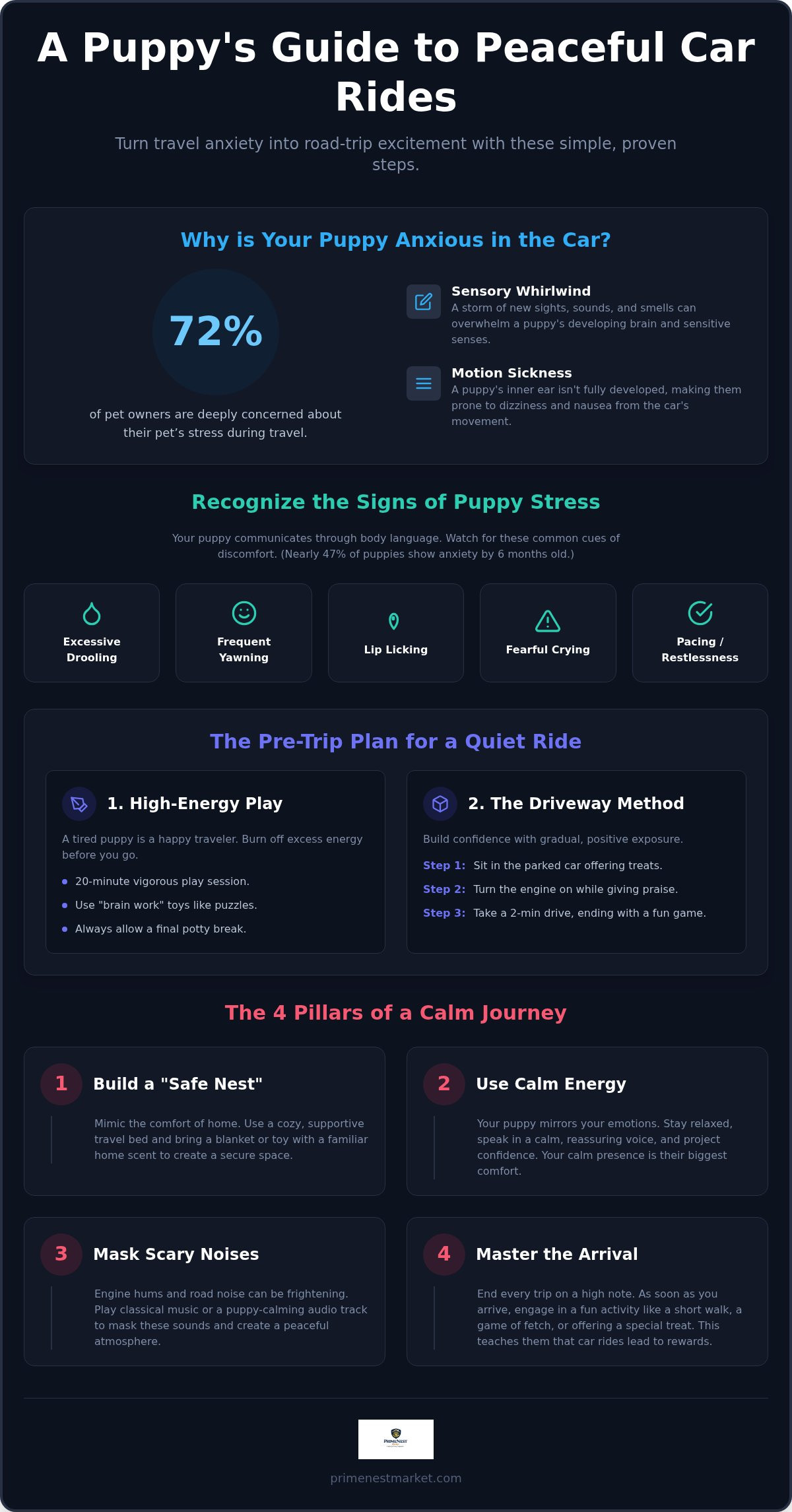
What if your puppy’s next car ride wasn't filled with frantic whining, but with peaceful naps and wagging tails! It sounds like a dream, doesn't it? We know exactly how it feels when those tiny whimpers start the moment you turn the key. In fact, a 2025 survey found that 72% of pet owners are deeply concerned about their pet’s stress during travel. Learning how to calm a puppy in the car is the ultimate secret to unlocking a lifetime of happy adventures together. You deserve a travel buddy who jumps into the seat with pure joy!
We’re here to help you turn that travel dread into road-trip excitement. This guide shares simple, heart-centered steps to transform your puppy’s anxiety into calm confidence. We’ll show you how to create a "Safe Nest" using cozy beds and smart tools that mimic the comfort of home. From managing tummy troubles to ensuring total driver safety, we’ve gathered everything you need for a peaceful journey. Let's get ready to hit the road with a happy, relaxed pup by your side!
Key Takeaways
- Understand the sensory "whirlwind" and inner-ear development factors that cause puppy car sickness and anxiety.
- Discover how simple pre-trip exercise rituals can burn off excess energy to encourage a natural, peaceful nap during the drive.
- Master how to calm a puppy in the car by building a "Safe Nest" using familiar home scents and supportive travel accessories.
- Learn to use your own calm energy and clever auditory tools to mask scary road noises for a whisper-quiet journey.
- Build lifelong car confidence by mastering the "Arrival Ritual" to ensure every trip ends with a joyful, rewarding experience.
Understanding Why Your Puppy Gets Anxious in the Car
Ever wonder why your furry friend transforms the moment you hit the road? It’s not just a case of the jitters. For a young dog, car anxiety is a sensory processing challenge where their developing brains struggle to filter a massive wave of new information. They are experiencing a literal whirlwind of vibrations, strange smells, and shifting gravity all at once. It's a lot for a little pup to handle!
Motion sickness is another huge factor. Since a puppy’s inner ear isn't fully developed yet, the swaying of the car can make them feel dizzy and nauseous. When you add the "trapped" feeling of a seatbelt or a new crate, it can trigger a sudden sense of panic. Understanding these physical hurdles is the first step in learning how to calm a puppy in the car. You’re not just a driver; you’re their safety guide!
The Sensory Overload Factor
Imagine seeing the world blur by at sixty miles per hour for the first time. It is intense! The rushing wind and passing cars create a visual storm that can be totally overstimulating. Then there is the sound. Puppies hear frequencies we can't even detect. High-pitched engine hums or the roar of the tires can trigger a genuine noise phobia, making them feel unsafe in the cabin. Even your favorite car air freshener can cause "smell fatigue." Since their noses are thousands of times more sensitive than ours, exhaust fumes and chemical scents can feel physically overwhelming.
Signs Your Puppy Is Stressed
How do you know if your pup is truly scared or just full of puppy energy? You have to watch their body language closely. Nearly 47% of puppies show separation-related behaviors or anxiety by the time they are six months old, so these cues are very common. Look for these specific physical signs:
- Excessive drooling: This is a classic indicator of nausea or deep emotional stress.
- Frequent yawning: In the dog world, this is a "calming signal" used when they feel uneasy.
- Lip licking: This often happens right before a puppy feels car sick.
- Fearful crying: This is different from "excited whining." Fearful crying is usually lower, persistent, and sounds like a plea for help.
- Pacing: If they can't sit still, it's because they don't feel anchored in their environment.
By recognizing these triggers, you can start building a much more comfortable environment. Your puppy depends on you to turn the car into a happy, predictable place!
Pre-Trip Rituals: Preparing for a Quiet Ride
Believe it or not, the secret to a peaceful journey happens before you ever turn the key! Success starts in your own driveway. If you wait until you're on the highway to figure out how to calm a puppy in the car, you're already behind the curve. We want to set your furry friend up for a win by creating a positive "car is fun" association from day one. It is all about preparation, patience, and plenty of high-value rewards!
The Power of High-Energy Play
A tired puppy is a happy traveler! We always recommend scheduling a vigorous 20-minute play session right before you load up. This is the perfect time to grab some dog toys for zoomies to help them burn off that frantic morning energy. When they’ve had their "high-speed" fun, they are much more likely to settle into a natural nap once the car starts moving.
Don't just focus on physical exercise. Use "brain work" toys like puzzles or sniff mats to mentally exhaust them too. A focused mind is a calm mind! Finally, always ensure your puppy has a chance to potty immediately before departure. A full bladder is a major source of restlessness and whining. If you’re looking for ways to keep them engaged, our curated enrichment toys are fantastic for pre-trip focus.
Desensitization: The Driveway Method
If your pup is already nervous, you need a slow and steady approach. This veterinary behaviorist's guide to car anxiety highlights that gradual exposure is key to overcoming travel fears. Follow these three simple steps to build their confidence:
- Step 1: The Treat Lounge. Sit in the parked car with your puppy for five minutes. Don't go anywhere! Just offer their favorite treats and lots of praise so they see the cabin as a "snack palace."
- Step 2: The Engine Hum. Start the engine while still in park. Continue rewarding them as they get used to the new vibrations and sounds. If they stay relaxed, they're doing great!
- Step 3: The Mini-Mission. Take a 2-minute drive around the block. End the ride with a fun game of tug or a short walk. This proves that car rides lead to awesome adventures!
By repeating these rituals, you’ll notice a huge shift in their attitude. Soon, your puppy won't just tolerate the car; they’ll be waiting by the door with a wagging tail!
Creating a Safe Car Nest with Travel Accessories
You’ve prepped the puppy and practiced in the driveway. Now, let’s talk about the environment itself! Creating a "Safe Nest" is one of the most effective ways to manage how to calm a puppy in the car. When your pup feels physically supported, their nervous system starts to relax. Think of it as building a little sanctuary on wheels. It’s about more than just safety; it’s about deep emotional security. We want your pup to feel like they are resting in a mobile version of their favorite corner at home!
Choosing the Right Travel Gear
The right equipment makes a world of difference for a nervous traveler. You might choose between a sturdy car-safe harness or a cozy travel crate. While harnesses keep them secure, a crate provides that instinctive "den" feeling many puppies crave. Did you know that airline approved pet carriers are perfect for this? They offer a familiar, enclosed space that doubles as a secure car nest. For smaller pups, a booster seat is a total game-changer. It lets them see out the window, which helps align their visual input with the car's motion to help prevent that dizzy feeling.
Stability is everything when you are on the move. Use non-slip mats or liners to ensure your puppy stays grounded. If they slide every time you take a turn, they’ll feel out of control and start to panic. We always recommend our curated selection of premium pet beds to create a soft, stable landing spot. When they feel the floor is steady, they can finally let out a sigh of relief and settle in for the ride!
Bringing the Comfort of Home
Scent is a puppy’s superpower, and you can use it to your advantage! Place a well-loved blanket or a soft puppy bed inside the car to anchor them with familiar smells. Here is a pro tip: don't wash the bedding right before your big trip. That homey, familiar scent is exactly what they need to feel safe in a new environment. It acts as a literal security blanket for their nose!
If your puppy still seems a bit restless, try the "t-shirt trick." Place a shirt you’ve recently worn in their travel space. Your scent acts as a reassuring bridge between the house and the car. It tells them that you are right there and everything is okay. When you combine the right gear with these personal touches, you create a space that naturally lowers stress. It’s all about the cozy factor!
In-Transit Calming Techniques for the Driver
You’re behind the wheel, and the pressure is on. But here’s a secret: your puppy is a tiny emotional sponge! They feed directly off your energy. If you are stressed and gripping the wheel, they will be too. Stay calm and keep your voice light and enthusiastic. This is a huge part of learning how to calm a puppy in the car. Your steady presence tells them that everything is exactly as it should be. You are their guide to a world of fun!
Auditory and Visual Management
Sound is a major trigger for a young dog. Use your car's speakers to your advantage! Play soft classical music or "dog-calming" white noise to mask the scary engine hum and the roar of passing trucks. This creates a consistent "sound blanket" inside the cabin. Keep the windows up to avoid startling wind gusts, but keep the AC running for fresh airflow. Shadows can be scary too. Fast-moving shadows on the highway often lead to reactive barking or pacing. Simple sunshades can block these visual "monsters" and keep the environment feeling much more like a peaceful room than a moving vehicle.
The Distraction Strategy
A busy mouth usually means a quiet puppy! Offer a durable chew toy that is safe for unsupervised use. This keeps them occupied and helps release tension through the natural act of chewing. Be careful with snacks, though. Avoid treats that cause heavy thirst or might upset a sensitive tummy during motion. You can also try calming pheromone sprays on their bedding for an extra layer of zen. These scents mimic the natural pheromones released by a mother dog, providing a deep sense of safety and belonging.
Don't forget the basics of comfort while you are on the move. Having the right outdoor pet gear, like portable water bowls, ensures your pup stays hydrated without messy spills during your stops. It’s all about being prepared for anything the road throws your way. When your pup has what they need, they can finally relax and enjoy the scenery!
Ready to transform your travel experience? Explore our curated pet travel essentials today and make every mile a joy!
The Arrival Ritual: Building Long-Term Car Confidence
You’ve made it! The engine is off, and you’ve reached your destination. But wait! The training isn't over just yet. In fact, the arrival ritual is arguably the most critical step in mastering how to calm a puppy in the car for the long haul. Why? Because your puppy’s brain is like a little recording device. The very last thing they experience becomes their strongest association with the entire trip. We want that final memory to be one of pure, unadulterated joy!
Consistency is your absolute best friend here. By making the end of the ride a celebration, you teach your pup that the "scary" car is actually a magical portal to fun adventures. Stick to these rituals every single time you pull into a driveway or a park. Before you know it, your puppy won't just tolerate the car; they’ll be wagging their tail the moment they see your keys!
Rewarding the Journey
As soon as you reach your destination, it's time for a puppy party! Don't just lead them inside and go about your day. Immediately engage in their absolute favorite game. Whether it's a quick round of fetch or a fun "find it" session in the grass, make the destination way more exciting than any stress they felt on the road. If they were quiet and relaxed during the ride, give them a "jackpot" reward! This means extra special praise, their favorite belly rubs, or a high-value toy they only get to see after a successful trip. It builds a powerful positive connection. Also, allow your puppy to explore the new environment at their own pace. Forcing them into a new space too quickly can cause a spike in cortisol, so let them sniff around and settle in naturally.
Planning for Frequent Stops
Long trips require a smart strategy. For a young dog, the world is big, loud, and sometimes a bit much to process all at once. Plan to stop every 60 to 90 minutes for a total "puppy reset." This isn't just a quick potty break; it's a vital mental break! Use a long leash so they can safely sniff and explore the rest area. Sniffing is a naturally calming behavior for dogs that helps lower their heart rate. While you're stopped, keep a close eye on their physical comfort. Puppies can overheat much faster than adult dogs. Monitor for signs of heat stress like heavy, frantic panting or bright red gums. Using cooling accessories or premium travel beds with breathable fabrics can keep them chilled and happy.
Ready to gear up for your next big adventure? Don't miss our Summer Pet Essentials Sale at PrimeNest Market! You can grab 10% off all orders over $50. It’s the perfect time to stock up on the travel gear and comfort essentials that turn every road trip into a stress-free celebration. Let's make those travel dreams come true together!
Ready for a Lifetime of Happy Adventures?
You have the plan and the heart! Now it’s time to hit the road with total confidence. Transforming your travel experience starts with understanding your pup's unique needs and building a cozy, predictable routine. From those high-energy pre-trip play sessions to the final celebratory arrival ritual, every small step creates a bond of trust. Learning how to calm a puppy in the car isn't just about a quiet ride; it’s about opening up a world of exploration for you and your best friend!
We are so excited to support your journey with curated quality for happy pets. Our secure checkout and fast shipping across the US mean you can get the gear you need without the wait. Don't let travel anxiety hold you back from making beautiful memories together. You are doing an amazing job, and we can't wait to see where your next trip takes you!
Shop our Premium Pet Travel Accessories and Save 10%!
Frequently Asked Questions
Is it okay to let my puppy sit in my lap while I drive?
No, you should never let a puppy sit in your lap while you are driving. It is a major distraction and can lead to serious accidents! In a sudden stop, an unrestrained pup can be injured or interfere with the steering wheel and pedals. For the safety of your furry best friend and yourself, always use a secure travel accessory to keep them anchored safely in the back seat. It is all about protecting your favorite passenger!
How can I stop my puppy from getting car sick?
Start by making sure your pup can see the horizon, which helps their inner ear stay balanced. Fresh airflow is a must! Keep the car cool and crack a window for a light breeze. If nausea persists, talk to your veterinarian about motion sickness options. Many owners find that short, positive practice runs are the best way to learn how to calm a puppy in the car and reduce those tummy troubles.
What is the best way to secure a puppy in the car?
The gold standard is a crash-tested safety harness or a sturdy travel crate anchored to the vehicle’s seatbelt system. This prevents your pup from wandering and keeps them safe during unexpected stops. A secure puppy is a much more relaxed puppy because they feel physically supported! We love using travel accessories that create a "den-like" feel, making the backseat feel like a cozy home away from home.
Can I give my puppy Benadryl or other calming aids for travel?
You should never give your puppy any medication without consulting your veterinarian first. While some aids are safe, the dosage for a growing puppy is very specific! Instead, try natural alternatives like calming pheromone sprays or a durable chew toy to keep them occupied. These gentle methods are wonderful for helping a nervous pup settle into their car nest without the need for heavy sedatives.
Why does my puppy bark at other cars through the window?
Your pup is likely experiencing sensory overload! The fast-moving shapes and "monsters" outside can be very startling for a young dog. This reactive barking is often a sign they feel insecure in their environment. Try using sunshades to block their view of passing traffic or position their booster seat so they can see the horizon without being overwhelmed by every car that zooms by. It keeps the cabin peaceful!
How long does it take for a puppy to get used to car rides?
Every pup is different, but most will settle in after three to four weeks of consistent, positive practice. The key is frequency! Short, joyful trips to the park or a friend's house help build their confidence much faster than one long, stressful journey. By staying patient and rewarding every small win, you’ll master how to calm a puppy in the car. Soon, your puppy will be jumping in with pure excitement!
Should I feed my puppy before a long car trip?
It is best to avoid a full meal right before you hit the road. Feed your puppy a light meal at least two to three hours before departure to prevent motion sickness and messy accidents. A full tummy combined with car vibrations is a recipe for a "messy" situation! Always make sure they have access to fresh water during your stops using a portable travel bowl to keep them hydrated and happy.