
Stop Destructive Dog Chewing: 2026 Guide for a Happy Home
Imagine walking through your front door after a long day, expecting a happy greeting, only to find your favorite leather armchair in pieces. That sinking feeling in your chest is all too familiar! You love your pup more than anything, but the constant monitoring and ruined belongings are leaving you totally exhausted. You need real solutions for destructive dog chewing that actually work. It's heartbreaking to feel like you can't leave your best friend alone without coming home to a disaster zone. We know exactly how you feel, and we're here to tell you that it doesn't mean you have a "bad dog."
This 2026 guide is your roadmap to reclaiming your home and your peace of mind! We'll dive into the real reasons behind the behavior and share the exact step-by-step strategies to protect your furniture while keeping your furry friend entertained, calm, and safe. We're covering everything from high-energy enrichment toys to cozy orthopedic beds that soothe anxiety. You'll discover how to provide the mental stimulation your pup craves so they can finally relax. Let's transform your home into a peaceful sanctuary where your belongings stay safe and your pup feels truly loved!
Key Takeaways
- Understand that chewing isn't spiteful; it's a natural way for your pup to communicate needs like teething or boredom.
- Discover how to swap your furniture for high-energy enrichment toys as effective solutions for destructive dog chewing.
- Learn the "Management First" rule to protect your high-value items and create a safe space for your dog to roam.
- See why a cozy orthopedic bed can reduce the stress that often leads to unwanted chewing sessions.
- Get a simple, step-by-step plan to audit your dog's habits and stop destruction before it even starts!
Why Is My Dog Destroying Everything? Identifying the 'Chew Trigger'
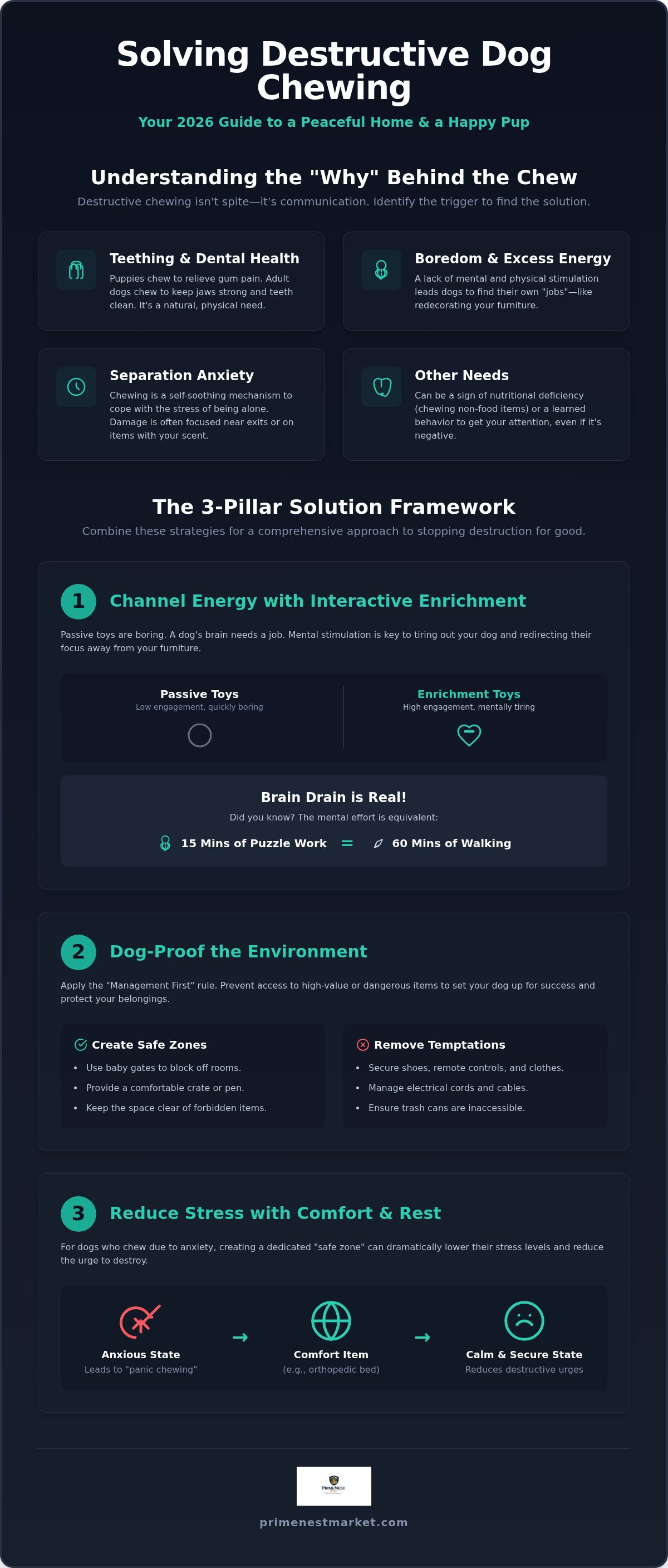
It's easy to feel like your dog is trying to get back at you for leaving them alone. But here's a secret: dogs don't do spite! They don't understand the price tag on your designer rug or the sentimental value of your favorite shoes. When your pup starts gnawing, they're actually trying to tell you something important. Finding effective solutions for destructive dog chewing starts with understanding the "why" behind every bite. Once you identify the trigger, you're halfway to a peaceful home!
Most chewing falls into what we call the "Big Three" categories: teething, boredom, or separation anxiety. However, don't overlook physical needs. Sometimes, it's even a cry for more nutrients! If your dog is raiding the trash or chewing baseboards, they might be seeking specific minerals or just feeling a bit peckish. Is your dog waiting until you sit down to start gnawing on the coffee table? That's a classic sign of attention-seeking! They've learned that chewing gets you to jump up and interact with them. Even if you're scolding them, it's still a win in their eyes. Identifying these triggers makes it so much easier to choose the right solutions for destructive dog chewing for your specific pup.
Teething vs. Adult Habit
Puppies go through so much as they grow! Their gums are sore, and chewing provides much-needed relief from the pressure of new teeth. You'll notice them targeting cold or hard surfaces to numb the ache. But what about adult dogs? They chew to keep their jaws strong and their teeth clean. Destructive chewing is simply a redirection of natural urges that haven't found a better outlet. If they don't have a curated selection of enrichment toys to focus on, your furniture becomes the next best thing!
The Anxiety Link
Does the destruction happen right after you leave? If you find damage around doors, windows, or your "exit" shoes, you're likely looking at separation anxiety. This isn't just boredom; it's "panic chewing." Your dog is trying to cope with an overwhelming flood of stress. They might even target items that smell strongly of you just to feel closer to their favorite human. Using comfort-focused items, like a plush orthopedic bed, can help lower their stress threshold. It gives them a dedicated "safe zone" where they can feel secure and calm while you're away. When they feel safe, the urge to destroy disappears!
Solution #1: Channeling Energy with Interactive Enrichment Toys
Many pet parents toss a rubber ball to their dog and wonder why the couch still gets shredded. The truth is, passive toys are often just plain boring! They don't engage your pup's clever mind. When we search for effective solutions for destructive dog chewing, we have to prioritize "brain drain." Did you know that just 15 minutes of mental puzzle work is as exhausting for a dog as a full hour of walking? It's true! By giving your dog a job to do, you're transforming that destructive energy into a productive, happy focus.
The goal is to make the toy more interesting than your furniture. Start by matching the toy's texture to your dog's specific chewing style. Does your pup love the "crunch" of wood? Find a safe, durable alternative that mimics that sensation. You can also use these toys to create a wonderful positive association with being alone. If the most exciting, treat-filled toy only appears when you grab your keys, your dog will actually start to look forward to their solo time! This shift in perspective is one of the most powerful solutions for destructive dog chewing you can implement today.
Puzzle Toys for Mental Stimulation
Treat-dispensing puzzles are a total game changer for bored pups. Instead of gnawing on a table leg, your dog spends their energy figuring out how to flip a lid or slide a block for a snack. This cognitive challenge is exactly what keeps them away from your belongings. In multi-pet homes, you might even find that some interactive cat toys offer great inspiration for keeping the whole pack engaged! When the brain is busy, the urge to destroy household items simply fades away. It's all about providing a healthy, rewarding outlet for that natural curiosity.
Durable Solutions for Power Chewers
Not all dogs are gentle with their things! If you have a power chewer, you need heavy-duty materials that can handle intense jaw pressure. Look for tough, non-toxic rubber that feels satisfying to sink teeth into. You can also use dog toys for zoomies to burn off that explosive energy before it turns into furniture destruction. A tired dog is a happy dog! To keep things fresh, try rotating their collection. Don't leave every toy out at once. Bringing out a "new" toy every few days prevents boredom chewing on the same old objects. If you're looking for the perfect match, you can explore our curated selection of enrichment toys designed for every type of chewer.
Solution #2: Dog-Proofing Your Home Environment
While we work on providing the right outlets for that energy, we also need to protect your beautiful home! The "Management First" rule is your new best friend. It's simple: if your dog can't reach it, they can't chew it. Think of this as setting your pup up for a win! By removing the opportunity for destruction, you're breaking the habit before it even starts. This is one of the most practical solutions for destructive dog chewing because it takes the pressure off both you and your pet.
Start by looking at your home from a dog's eye level. What looks tempting? Table legs, baseboards, and even the corners of your favorite rug are all fair game. You can use physical barriers like baby gates to block off rooms with high-value furniture. For those items you can't move, consider safely applying a taste deterrent. These bitter sprays make the experience of chewing much less enjoyable! Just remember, if you come home to a mess, don't punish your dog after the fact. They won't connect the scolding to an action they did hours ago. Instead, focus on cleaning up and refining your dog-proofing strategy for the future.
Creating a Safe Zone
Every dog needs a space where they can be themselves without getting into trouble! Setting up a dedicated "dog-proof" room or using a sturdy playpen gives your pup freedom while keeping your belongings safe. If you're traveling or need a short-term secure spot, an airline approved pet carrier can serve as a cozy, familiar den. Make sure to clear this area of "temptation items." Shoes, TV remotes, and kids' toys should all be tucked away in closets or high bins. When your dog is in their safe zone, they can focus on their own toys instead of your treasures!
Clean-Up and Odor Management
Did you know that the scent of past destruction can actually invite your dog back for a second round? It's true! Dogs use their noses to navigate the world, and a lingering scent acts like a signpost for "chew here." That's why deep cleaning is such a vital part of your solutions for destructive dog chewing. You should always avoid ammonia-based cleaners, as they can smell like urine to a dog and attract them back to the spot. For the best results, consult our Ultimate Guide to Pet Stain and Odor Removers to find effective, pet-safe options. Removing that scent trail is a huge step toward a chew-free future!
Solution #3: Reducing Stress Through Comfort and Rest
Did you know a cranky dog is often just a sleepy dog? It's true! Just like humans, our furry friends get irritable when they don't get enough high-quality rest. When your pup is overtired, their impulse control completely vanishes. This often leads to frantic, agitated gnawing on anything within reach. Creating a dedicated "calm space" is one of the most overlooked solutions for destructive dog chewing. It gives your best friend a place to switch off and recharge. When they feel secure and relaxed, the urge to take out their frustration on your furniture simply melts away.
Senior dogs face their own unique challenges too. If your older pup has started chewing out of the blue, it might be joint-related frustration. Physical pain makes them restless and grumpy. They chew to distract themselves from the ache in their hips or shoulders. Addressing these physical needs is just as important as any training session! By focusing on their comfort, you're removing the stress that fuels the destruction. It's a win for their health and your home.
Orthopedic Support for Anxious Dogs
A lumpy old cushion just doesn't cut it for a dog prone to stress. High-quality support makes a world of difference! Our orthopedic pet beds provide the perfect sanctuary for anxious souls. These beds distribute weight evenly, which offers a massive psychological benefit. Your dog feels "held" and safe, allowing for deeper, more restorative sleep cycles. If you have a big bestie, you can check out the large dog beds on sale to score premium comfort for your giant companion. A well-rested dog is a peaceful dog!
Summer Cooling Solutions
Heat is a major trigger for restless, destructive behavior! When a dog is overheated, they simply can't settle down. This physical agitation often manifests as frantic chewing on cool surfaces like tile or metal table legs. Using cooling mats helps lower your dog's core temperature quickly and safely. Proper thermoregulation directly improves a dog's impulse control, making them much less likely to lash out at your belongings. It's all about keeping them cool, calm, and collected even when the temperature rises! Ready to upgrade their nap time? Browse our premium comfort and sleep collection to help your pup find their zen today.
The Step-by-Step Plan to Stop Destructive Chewing for Good
Ready to turn your home back into a peaceful sanctuary? It's time to put all our knowledge into action! Stopping the cycle of destruction isn't about luck. It's about having a clear, repeatable plan that addresses your dog's needs before they turn into furniture-munching urges. By following these structured steps, you'll find the most effective solutions for destructive dog chewing for your unique household. Let's get started on this journey together!
Step 1: Perform a "Chew Audit." Grab a notebook and track when the destruction happens. Is it ten minutes after you leave? Or perhaps right at 3:00 PM when the neighborhood gets noisy? Identifying these patterns helps you predict and prevent the next "oops" moment. Step 2: Implement a morning high-intensity play session. Drain that physical battery early! A game of fetch or a vigorous session of tug makes a world of difference. Step 3: Introduce an "Interactive Breakfast." Ditch the traditional bowl. Using a puzzle toy for their morning meal provides essential mental stimulation while you're getting ready for your day. Step 4: Practice "Short Departures." Build your dog's confidence by leaving for just a few minutes at a time. Gradually increase the duration as they learn that you always come back!
Creating a Daily Enrichment Schedule
Consistency is key for a happy pup! A predictable routine lowers anxiety and helps your dog understand when it's time to play and when it's time to rest. Try this simple daily flow:
- Morning: Focus on physical exercise and high-energy play to burn off steam.
- Mid-Day: Provide mental puzzles and safe solo-play toys to keep them occupied while you're busy.
- Evening: Focus on calm bonding. This is the perfect time for at home grooming, which naturally lowers stress levels and strengthens your connection.
Monitoring and Adjusting Your Strategy
Your dog's needs will change as they grow and learn. Keep a "chew log" to track your progress! You'll love seeing the number of "chew-free days" increase over time. If you notice your pup is solving their puzzles in record time, it's a sign they're ready for a challenge. Increase the difficulty of their toys to keep that brain working hard. However, if you've implemented these solutions for destructive dog chewing and still see intense panic or self-injury, it's time to consult a professional behaviorist. They can provide extra support for severe cases of separation anxiety. You've got this, and we're cheering you on every step of the way!
Start Your Journey to a Happier Pup Today
You've got the tools to transform your home! Remember, understanding your dog's "chew trigger" is the first step toward harmony. By combining smart environmental management with high-quality mental stimulation, you're giving your pup exactly what they need to thrive. These proven solutions for destructive dog chewing help you move past the frustration of ruined furniture and toward a life of joyful bonding.
We're so excited to help you and your furry friend find your zen! Our team of pet lovers has curated a selection designed to keep tails wagging and sofas safe. Plus, our Summer Pet Essentials Sale is happening right now! You'll get 10% off orders over $50, and we offer fast shipping across the United States to get your favorites home quickly.
Shop our Premium Enrichment Toys and save 10% on your summer order! You can do this, and your pup is going to love the new routine!
Frequently Asked Questions
Is my dog chewing out of spite because I left the house?
No, your dog isn't acting out of spite! Dogs don't have the cognitive ability to plan revenge or feel "even." Usually, chewing when you're gone is a sign of separation anxiety or simple boredom. They miss your scent and find comfort in gnawing on things that smell like you. It's a way for them to self-soothe when they feel lonely or stressed while you're away.
What are the best toys for aggressive power chewers?
Look for toys made from ultra-durable, non-toxic rubber or solid nylon. These materials are designed to withstand the intense jaw pressure of a power chewer. Avoid plush toys with squeakers or thin plastic that can be easily swallowed. Providing a variety of tough textures keeps them interested and protects your furniture from their strong teeth. It's all about finding that perfect, indestructible match for their strength!
Can I use bitter spray to stop my dog from chewing the couch?
Yes, bitter sprays are great deterrents! They make the object taste unpleasant, which discourages your pup from coming back for more. However, it's just one of the many solutions for destructive dog chewing. You should always pair sprays with positive reinforcement and plenty of appropriate chew toys. If you don't provide a fun alternative, they'll just find something else to gnaw on that doesn't taste bad!
How much exercise does a dog need to stop destructive behavior?
Most dogs need at least 30 to 60 minutes of vigorous physical activity every day. High-energy breeds might require even more! Remember, physical exercise should always be paired with mental enrichment. A tired dog is much less likely to look for trouble. If they've had a good run and some brain games, they'll be much more interested in napping on their bed than eating your favorite shoes.
Are there any household items that are safe for dogs to chew?
It's best to avoid letting your dog chew on household items like old shoes or cardboard boxes. This can create confusion! Your pup won't understand why one old boot is okay but your brand-new sneakers are off-limits. Stick to dedicated pet toys that are specifically tested for safety. This prevents them from accidentally swallowing staples, glue, or small parts that could lead to an expensive and scary emergency vet visit.
Why does my dog only destroy my things and not my partner's?
Your dog likely targets your belongings because they carry your strong, comforting scent! If you're the primary bond, your items provide the most security when they feel anxious or lonely. It's actually a bit of a compliment, even if it's a messy one. They're seeking a connection to you when you aren't around. Providing a t-shirt you've recently worn in their sleeping area can sometimes help satisfy this need safely.
Is crate training a good solution for destructive chewing?
Crate training is a wonderful management tool! It keeps your pup safe and your home intact when you can't provide direct supervision. When used correctly, the crate becomes a cozy den where your dog feels totally secure. It's one of the most reliable solutions for destructive dog chewing during the training phase. Just ensure they have a durable, safe toy inside to keep them happy and occupied while they rest in their space.
What should I do if I catch my dog in the act of chewing furniture?
Stay calm and interrupt them with a quick noise, like a clap or a whistle! You want to startle them just enough to stop the behavior without causing fear. Immediately redirect their attention to a pet-safe chew toy and offer lots of enthusiastic praise when they start gnawing on that instead. Never yell or use physical punishment. You want them to learn what is okay to chew, not to be afraid of you!